Canadian golf has a five-month hole in it. Most golfers spend that hole doing nothing and start the next season roughly where they finished the last one, minus a bit of rust.
The ones who come out better in May are not the ones who hit the most balls in January. They are the ones who worked on the right thing. Here is how to find out what that is for you.
Strokes do not come from where you think
Ask a mid-handicapper what is costing them shots and they will say driving. Look at their card and it is almost never driving.
For most golfers between 10 and 25, the biggest pools of lost strokes are:
- Penalty shots and recovery. Not distance off the tee — the tee shots that end up somewhere you cannot advance the ball from.
- Wedges from 50 to 110 yards. The zone where you have no full swing and most people have no system.
- Three-putts. Nearly always caused by the approach putt, not the short one.
- The second bad shot. One poor swing costs a stroke. Trying to make it back in one costs two more.
Notice how little of that is about hitting the ball further. Notice also how much of it a simulator can measure.
What a bay can genuinely fix
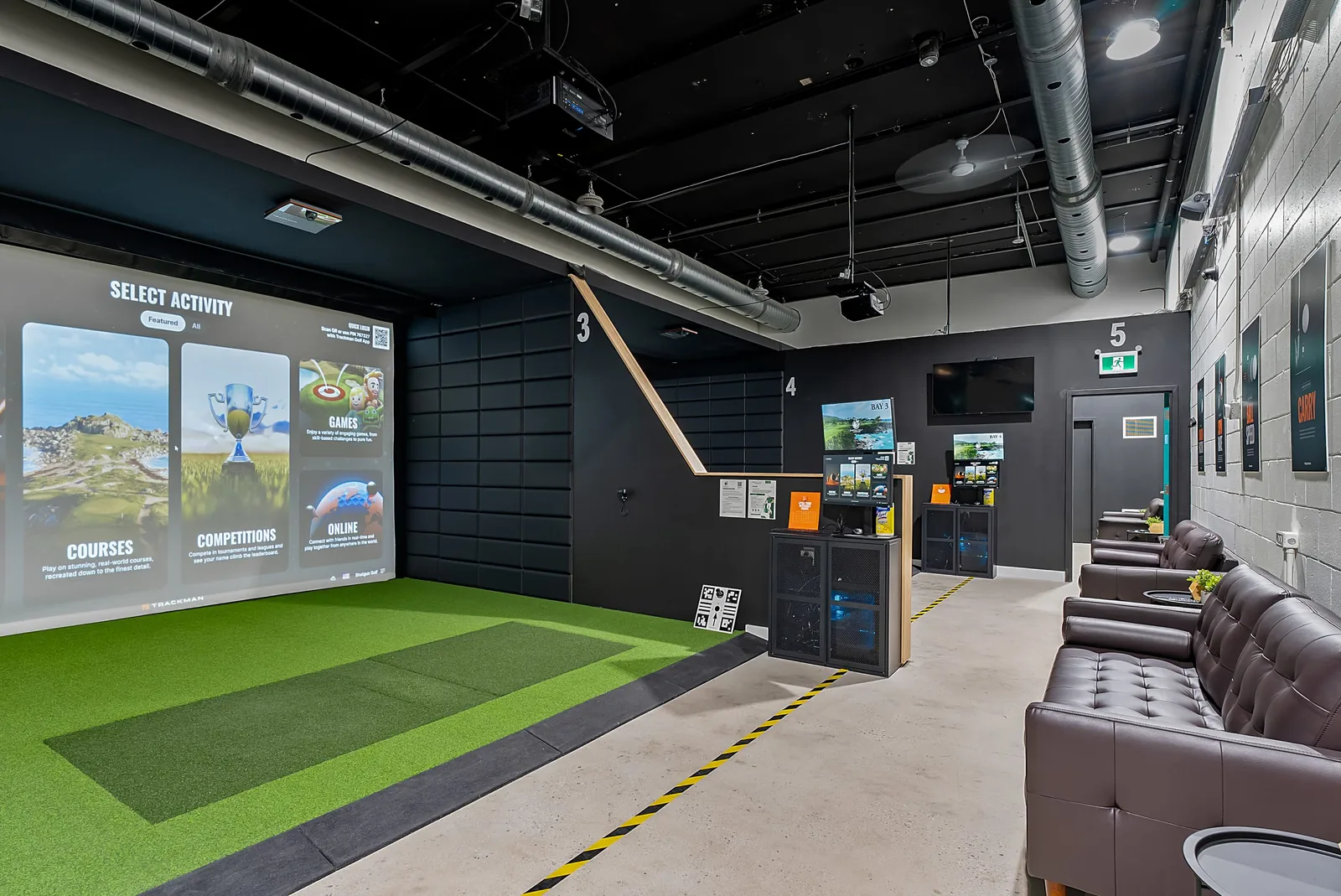
Distance control with wedges. This is the strongest case for indoor practice full stop. You need to know your carry numbers for a half, three-quarter and full wedge, and there is no way to learn them on a range where you are guessing at flags. Twenty minutes a week for a winter and you arrive in spring with a wedge game most of your group does not have.
Your real distances. Almost every golfer plays a 7-iron number they hit once, downwind, in July. Ten shots per club in a bay gives you an honest average. Club selection built on honest averages removes more strokes than any swing change.
Start line and curve. The face-and-path work that turns a two-way miss into a one-way miss. If you know the ball is only going to curve one direction, you can aim, and aiming eliminates the penalty shots above.
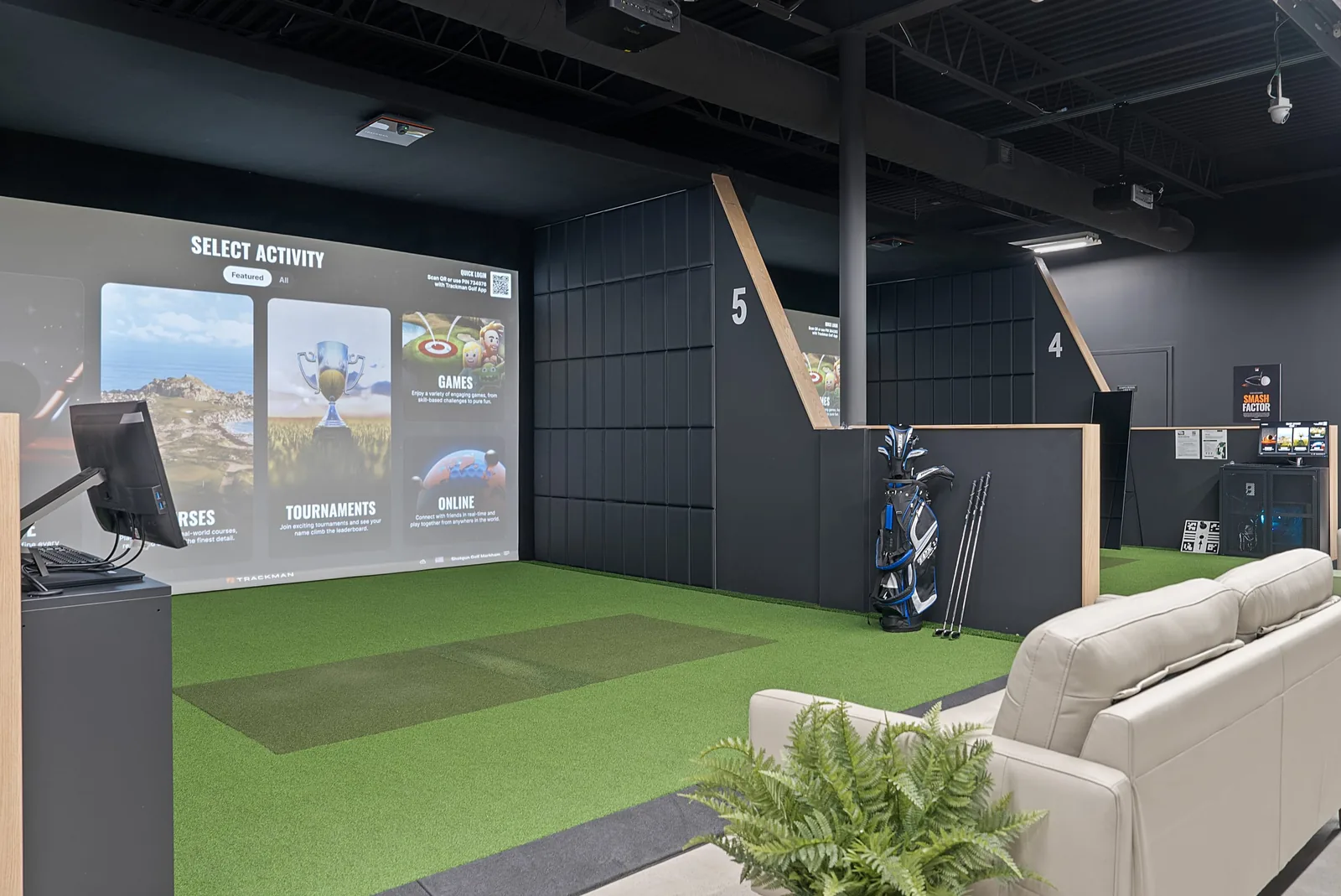
Strike. Smash factor tells you whether contact is improving, week to week, without any interpretation.
What a bay will not fix
Be honest about this part, because winters get wasted on it.
Putting, beyond routine. Indoor putting surfaces are not your Saturday greens and the read is simulated. Practise the pressure, not the stroke.
Lies. Every shot indoors is off a perfect mat. Uphill, downhill, sidehill, rough, sand — none of it. A winter indoors will leave your ball-striking sharper and your recovery play exactly where it was.
Course management, mostly. You can play a simulated round, but nothing is at stake and you can always reload. The decision-making that costs real strokes does not get practised.
Which is fine. Fix what is fixable indoors and be ready to spend April on the rest.
A winter plan that works
Weeks 1-2: measure. Two sessions, no swing changes. Ten shots per club, write down the average carry and the spread. This is your baseline and your yardage book. Most people find at least two clubs go the same distance, which is a gapping problem worth knowing about before you buy anything.
Weeks 3-10: one change, plus wedges. Pick the single biggest leak from the list above and work on it. Half of each session on that, half on wedge distance control, every time. Eight weeks is long enough for one real change and not long enough for three.
Weeks 11-16: transfer. Stop blocked practice. Random targets, different club every shot, play simulated rounds and take the first swing seriously because on a course you only get one.
Last two weeks: measure again. Same test as week one. If the numbers moved, you know what worked. If they did not, you know the winter went into feel rather than function — and that is worth knowing too.
The thing that decides it
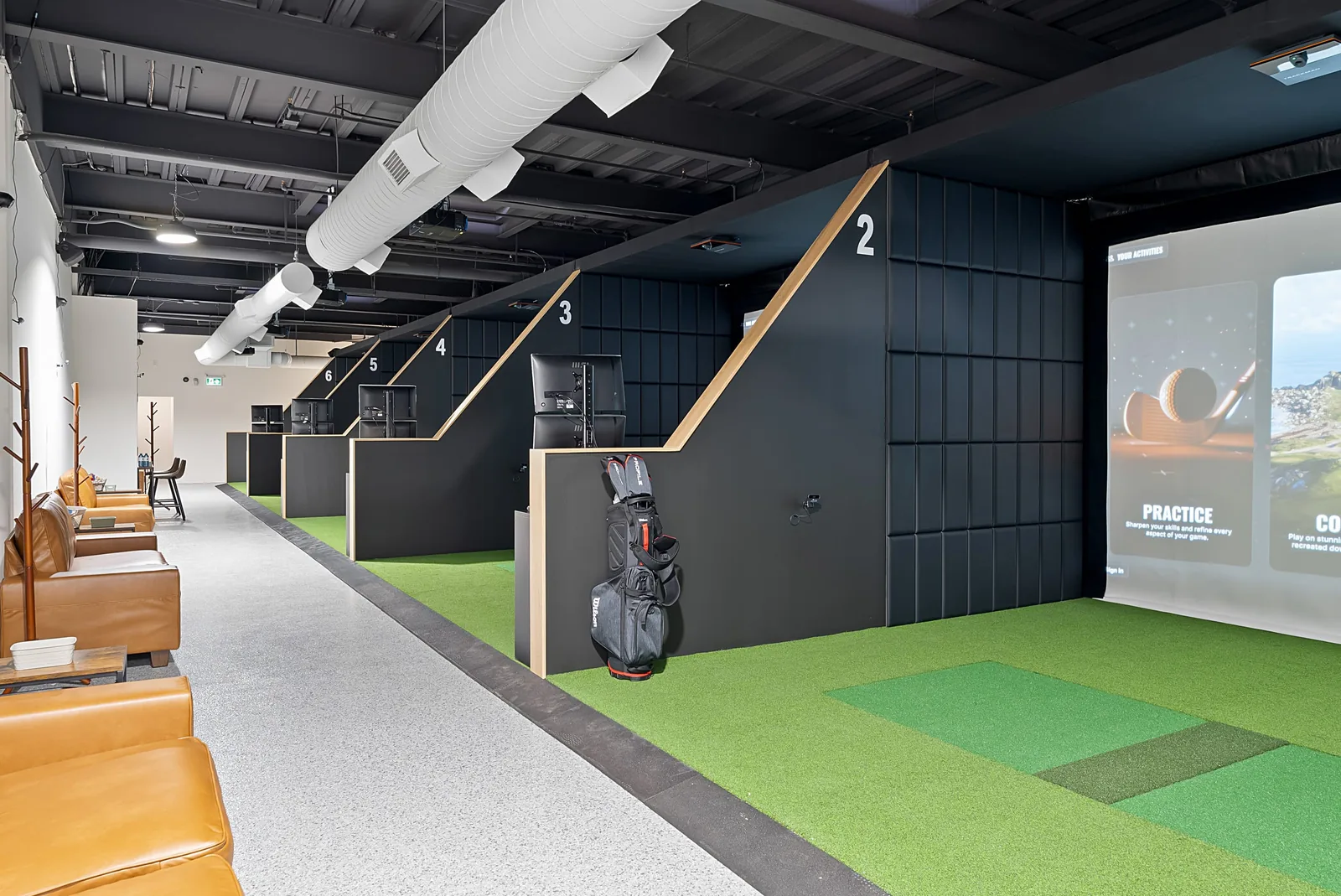
Frequency beats duration. One focused hour a week for sixteen weeks will do more than eight three-hour sessions in March. That is an argument for booking a bay near you and at a time you will actually use — which for a lot of our members turns out to be before work or late at night, when it is quiet and the rate is lowest.
See the rates, find the nearest bay, or work with a coach if you would rather not guess at which leak to fix first. The session structure and the drills are the practical end of this.