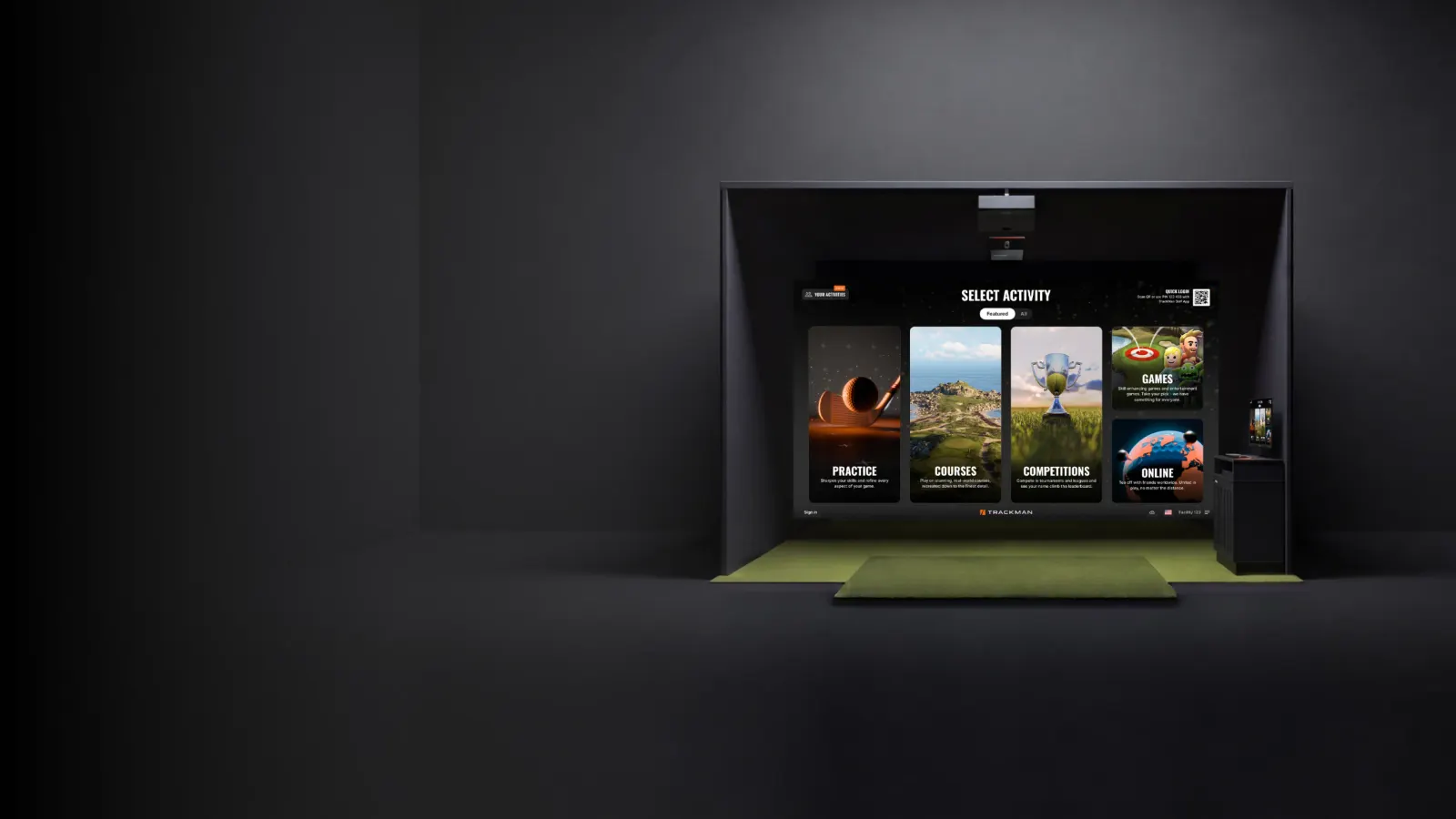
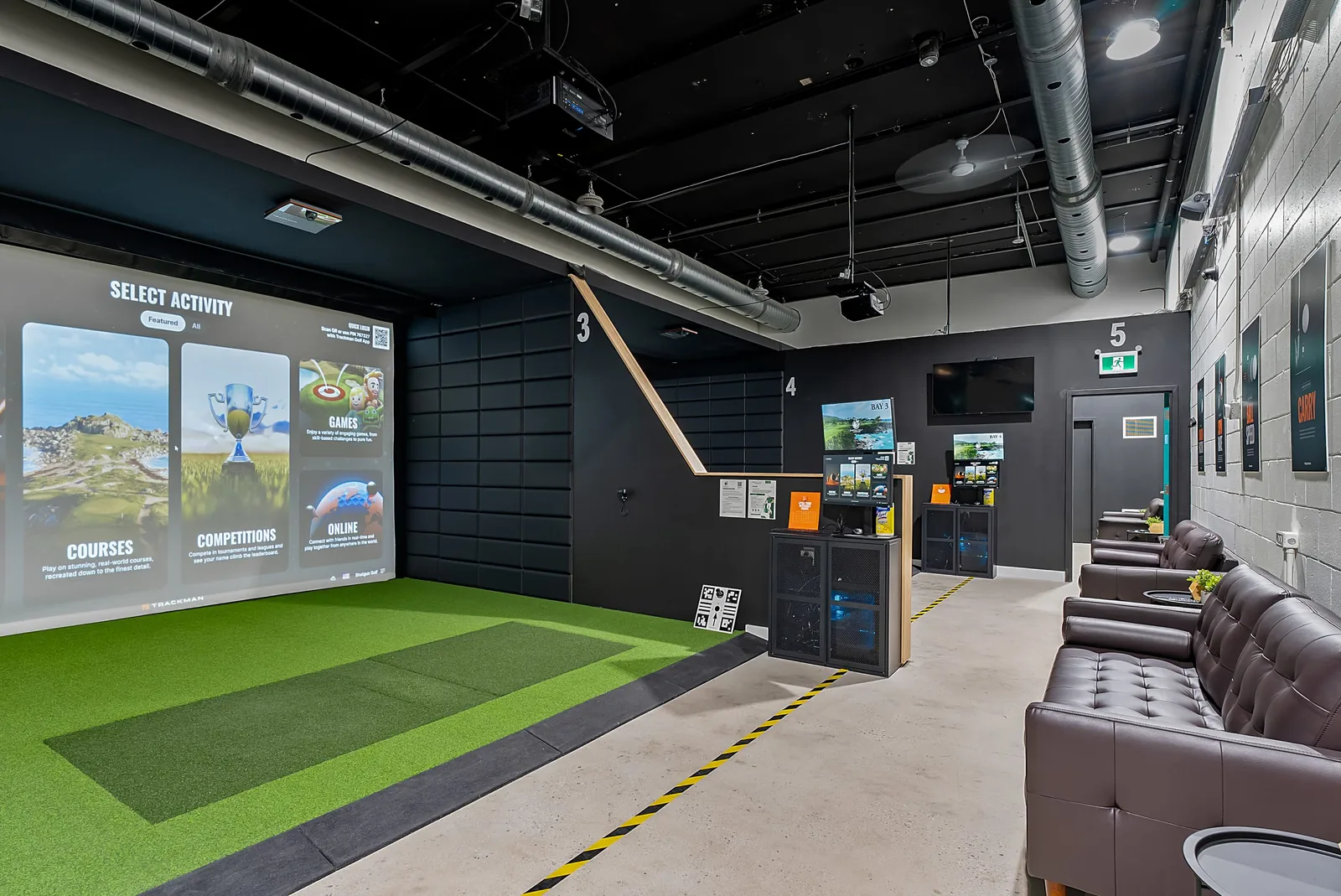
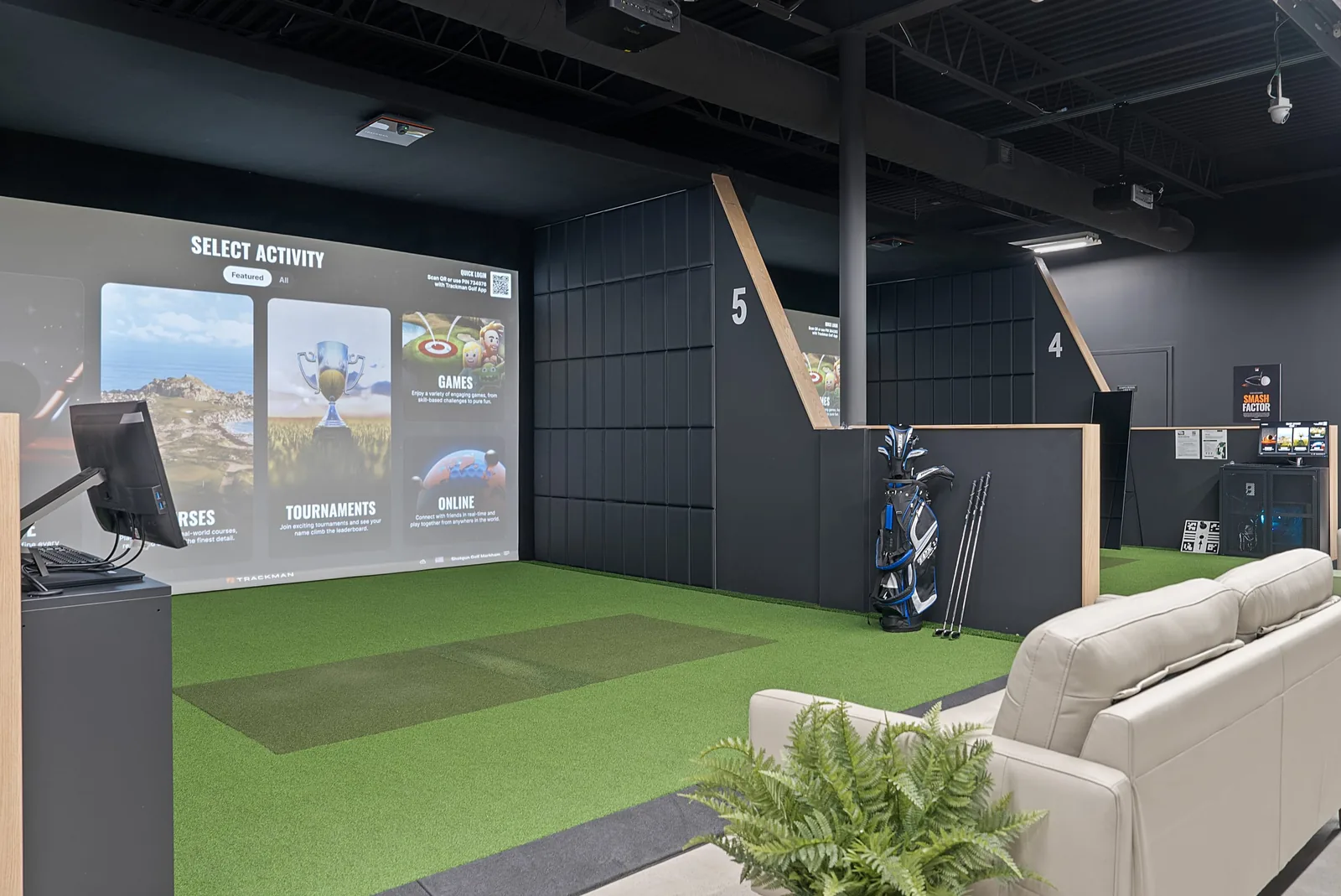
Switch a bay into shot analysis and TrackMan will hand you more than thirty measurements for a swing that took a second and a half. Most golfers glance at it once, decide it is for coaches, and go back to playing Pebble Beach.
That is a shame, because four or five of those numbers will tell you more about your golf than an hour of guessing. Here is what each one means, in plain terms, and which ones to actually watch.
The definitions in the boxed panels below are TrackMan's own, from their Know Your Numbers series.
Start here: the four that matter
If you read nothing else, read these.
Ball speed
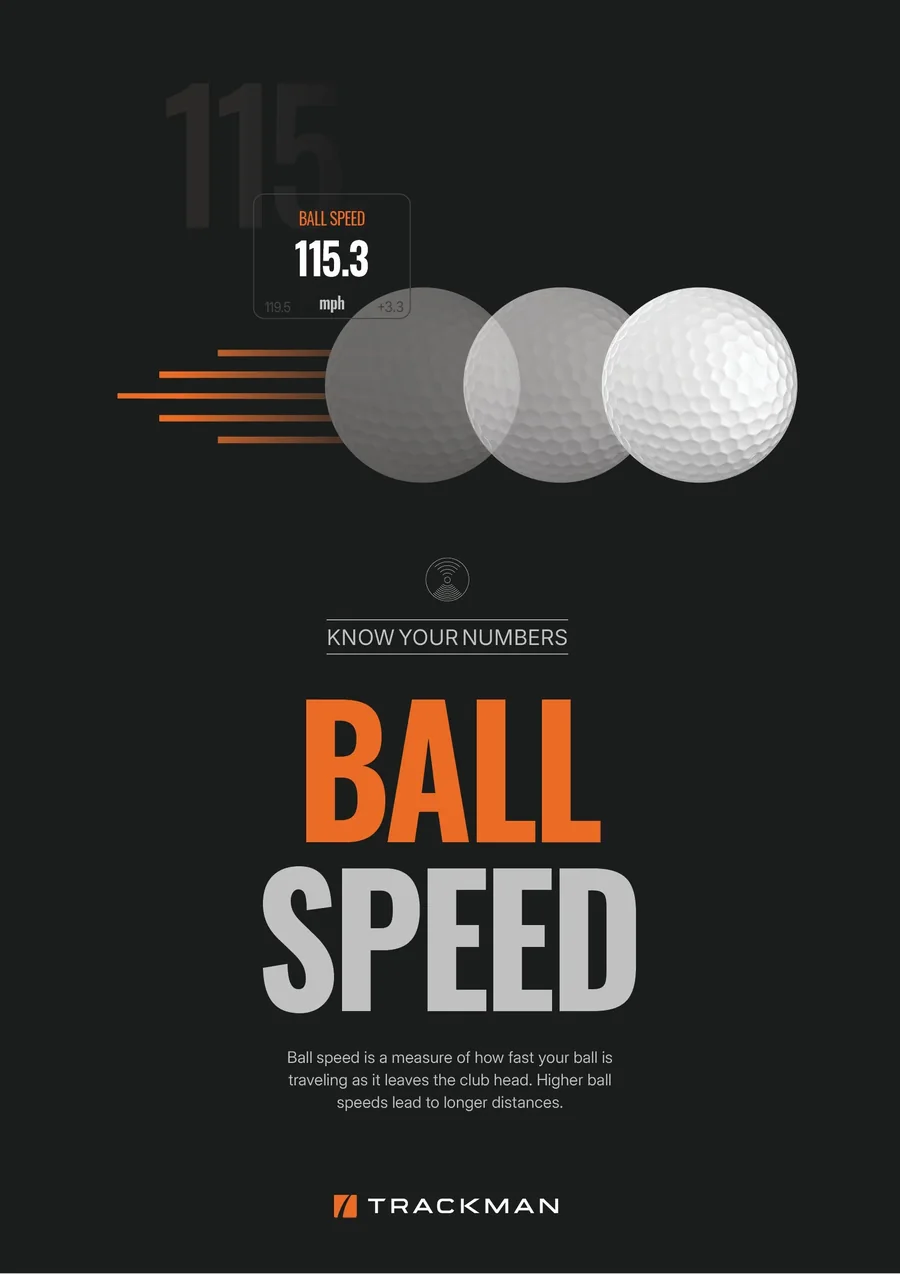
The honest measure of how well you struck it. Ball speed does not care how the swing looked, whether your grip is textbook, or what your playing partners said. Hit it out of the middle and the number goes up.
It is also the number that most directly drives distance. If you are trying to hit it further, this is the one to move — more so than club speed, because a faster swing that finds the toe produces less ball speed than a slower one out of the centre.
Smash factor
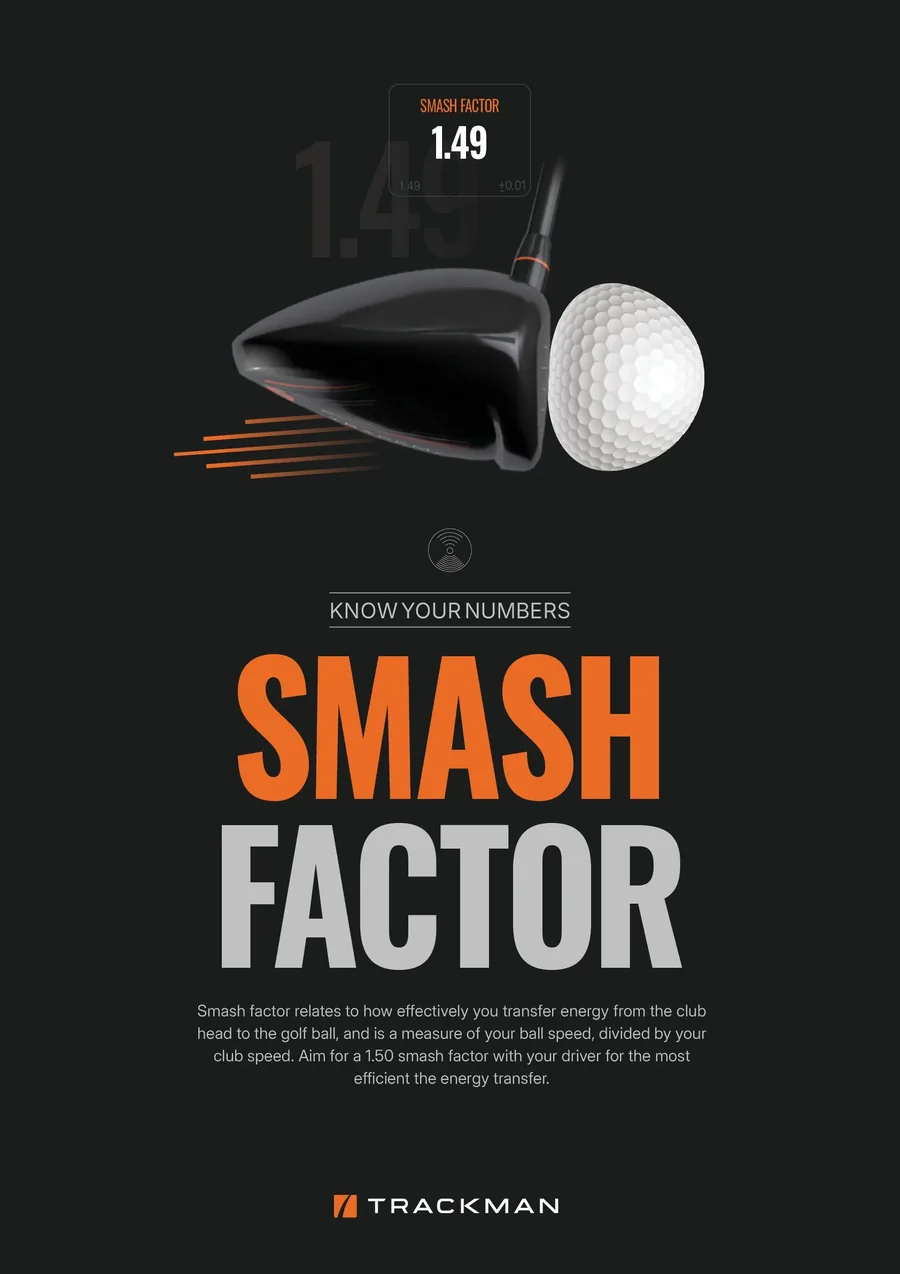
Ball speed divided by club speed — how much of your swing actually reached the ball. It is the efficiency number, and it is the fastest way to find out whether your problem is power or contact.
TrackMan's benchmark is 1.50 with a driver. If you are swinging 95 mph and seeing 1.50, you are getting everything available out of that swing. If you are swinging 105 and seeing 1.35, you have speed you are not using, and the fix is contact, not the gym. Expect the number to fall as the clubs get shorter — mid-irons live nearer 1.38, wedges lower still, and that is normal rather than a fault.
Carry
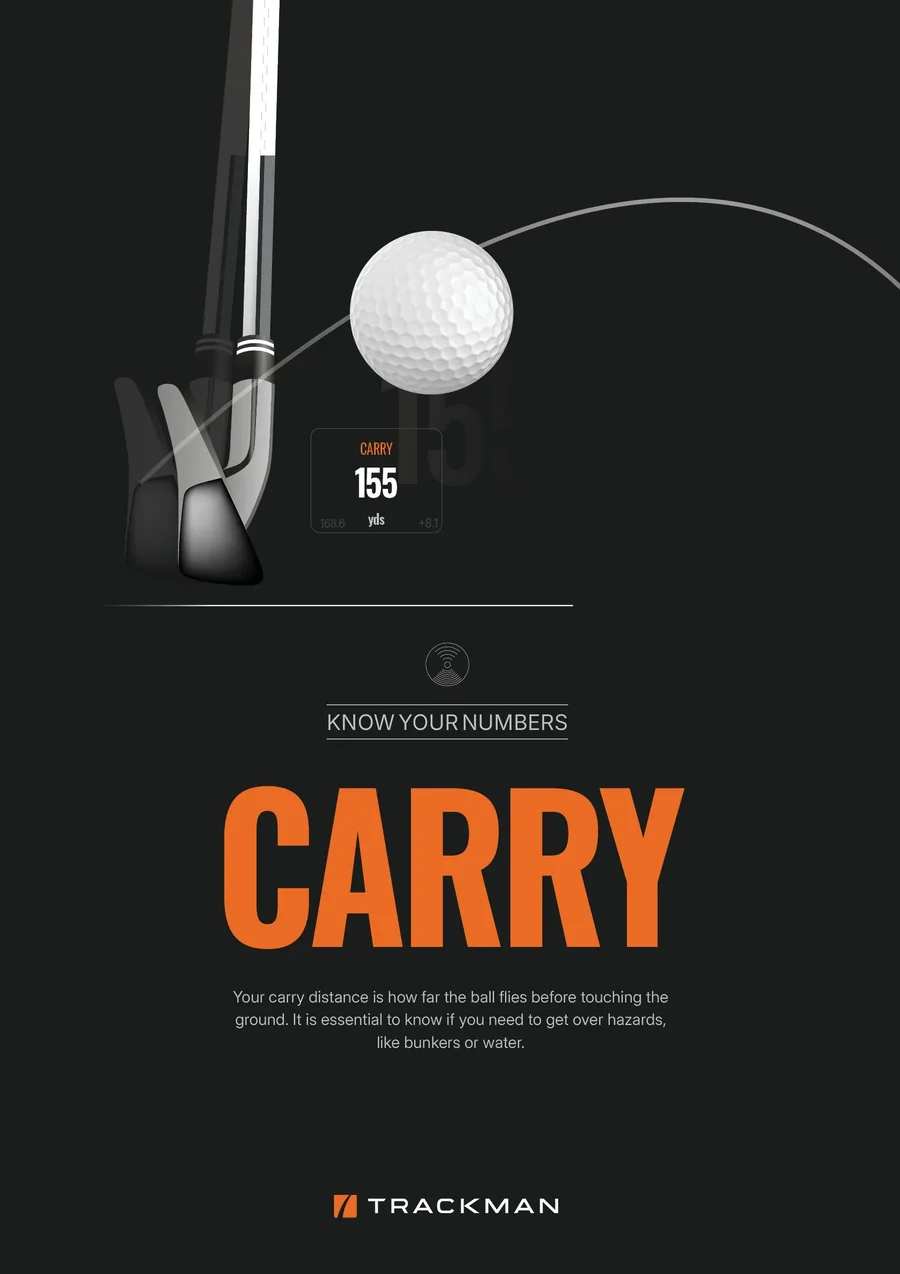
How far the ball flew before it landed. This is the number to write down for each club, because it is the one that decides whether you clear the water.
Most golfers find their carry numbers are shorter than the ones they have been quoting for years, usually because those numbers came from a best-ever shot with a following wind. An hour in a bay hitting ten 7-irons gives you an honest average, and an honest average is what club selection is actually built on.
Spin rate
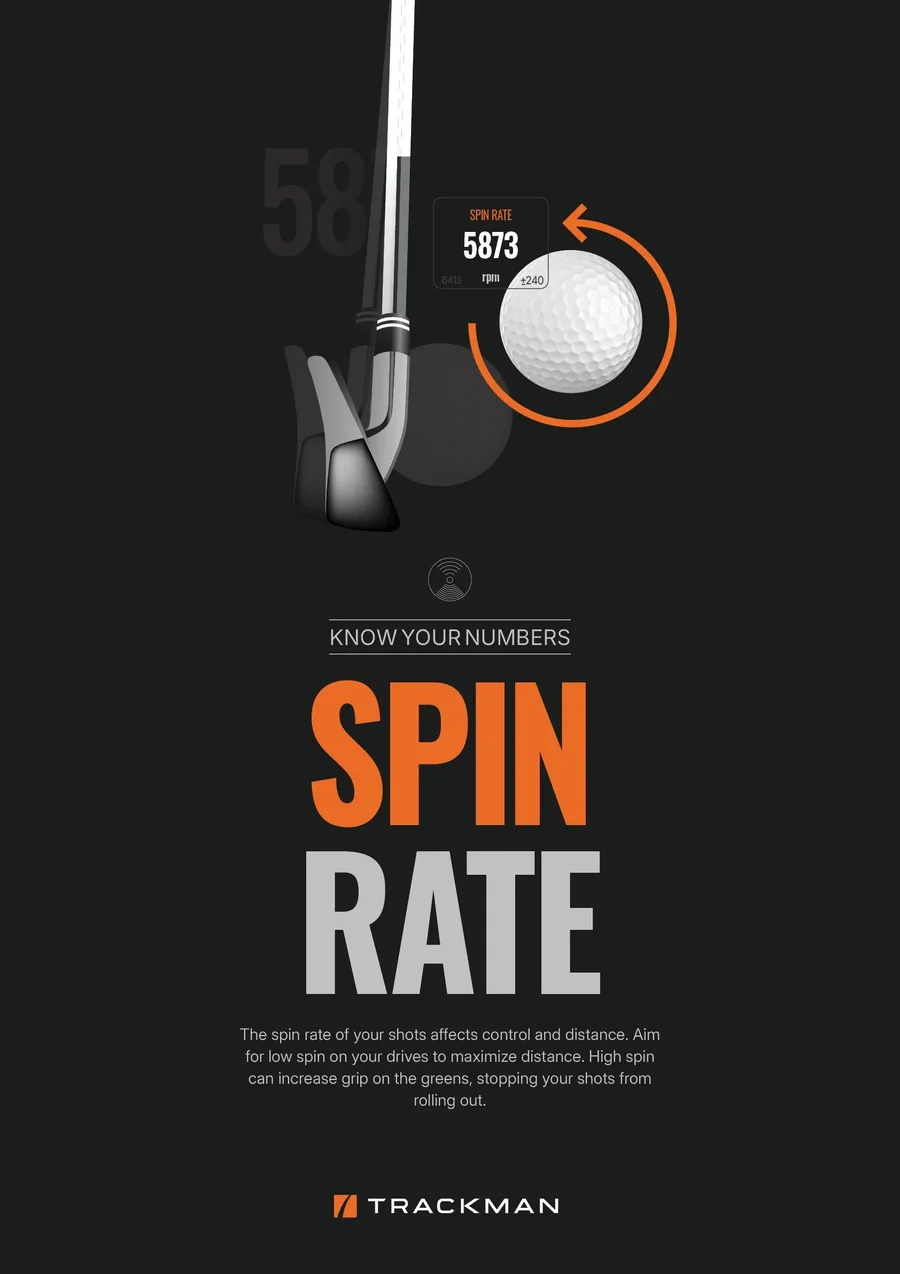
How fast the ball is rotating, in revolutions per minute. Spin is what makes the ball climb and what makes it stop.
The thing to understand is that you want opposite things from different clubs. Off the driver, too much spin balloons the flight and costs you distance — you want it low. Into a green, spin is what stops the ball dying forward over the back. Seeing a driver at 4,000 rpm and a wedge at 9,000 is not a contradiction; it is the game working properly.
The two that explain your shot shape
Club path
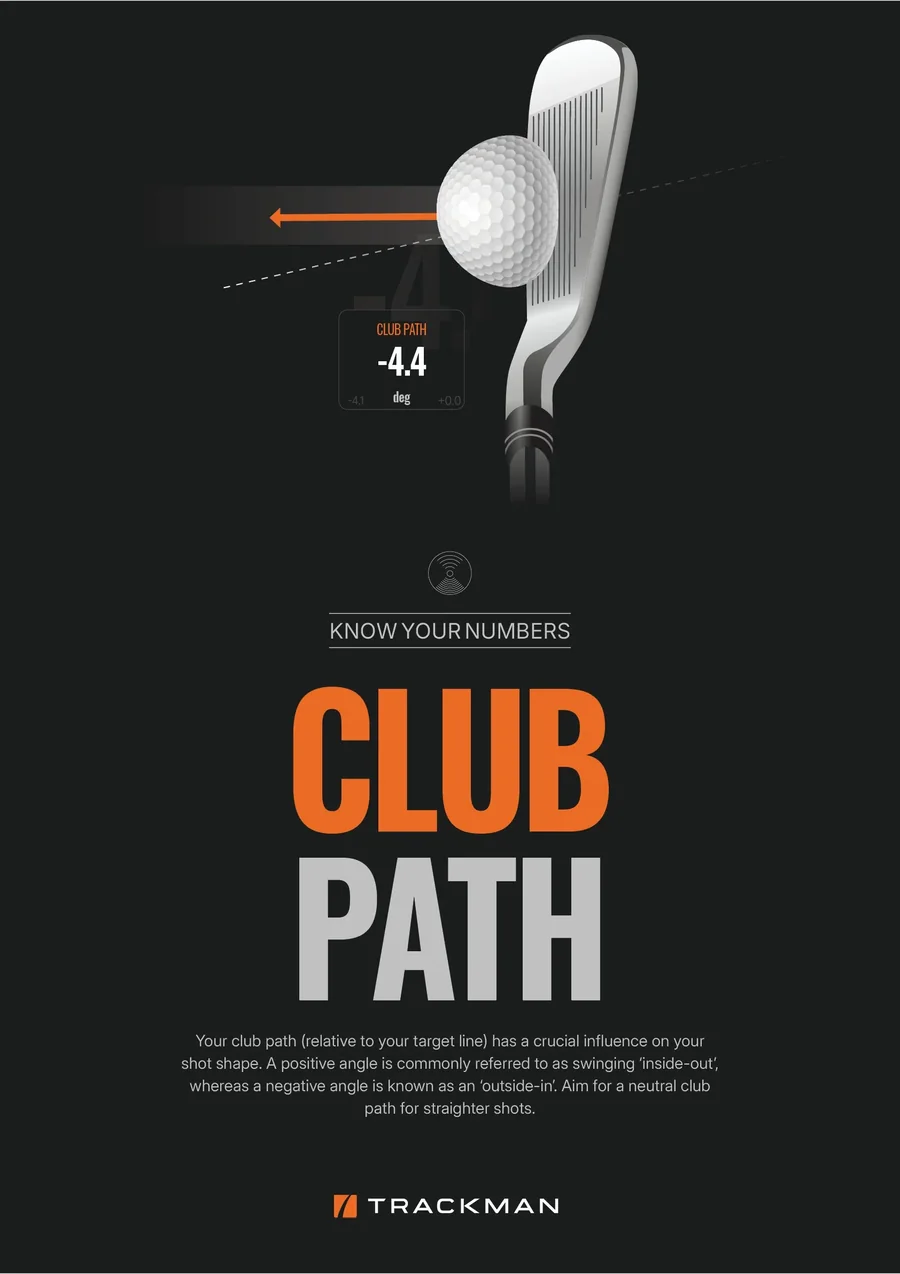
The direction the club head is travelling at impact, relative to your target line. Positive is what most people call "inside-out"; negative is "outside-in", the move behind the standard slice.
Club path on its own does not curve the ball, though. That happens in combination with the next one.
Face angle and face to path
Face angle is where the club face is pointing at impact. Face to path is the gap between the face and the path, and that gap is what actually bends the ball.
The rule is simpler than it sounds: the ball starts roughly where the face is pointing and curves away from the path. So an outside-in path with a face that is square to the target gives you the classic weak fade. Match the face to the path and the ball goes straight, whichever direction the path is pointing.
This is the pair worth a private bay and a slow hour. It is also where a lesson pays for itself, because seeing the two numbers move together is much easier with someone telling you what to change.
The rest, briefly
- Club speed — how fast the club head is moving at impact. Interesting, but chasing it usually costs you smash factor.
- Launch angle — the angle the ball leaves at, relative to the ground. With ball speed it is one of the two things that decides height and distance.
- Attack angle — whether the club is moving up or down at impact. Down with irons, ideally slightly up with a driver off a tee.
- Dynamic loft — the actual loft delivered at impact, which is rarely the loft stamped on the club.
- Spin axis — the tilt of the ball's spin. Tilted right, the ball curves right. It is the number underneath every slice and draw.
- Total — carry plus roll, the distance to where the ball finishes. Useful on a course, misleading in a bay, because roll is simulated.
- Landing angle and height — how steeply the ball comes down and how high it got. Both matter for whether a shot holds a green.
Tracy will read them for you
You do not have to interpret all of this alone. Shot Analysis Mode has Tracy, TrackMan's AI swing analysis tool, built into it — it reads the same data as you hit, detects the characteristics of your swing, and points at the inefficiencies worth working on rather than leaving you to rank thirty numbers yourself.
Log into your TrackMan account on the bay screen, go to Shot Analysis Mode, pick a club and hit a series of shots. Tracy analyses what you just did and highlights where the improvement is. It also compares sessions, so you can see whether last month's change actually stuck.
Tracy has been part of TrackMan 4 for years and is now on TrackMan iO as well, which is what every Shotgun Golf bay runs. TrackMan's own framing is the right one: it "doesn't replace coaching but rather enhances coaching". It reads your club and ball. It does not see your grip or your setup, which is what a coach is for.
Knowing what the terms above mean still matters — Tracy will tell you your attack angle is the problem, and it helps enormously to know what an attack angle is.
How to actually use an hour
Three things, in this order:
- Hit ten shots with one club and ignore the screen. Then look at the average carry and the spread. That is your real number for that club.
- Check smash factor before you change anything about your swing. If it is low, the problem is contact, and no amount of swing theory fixes contact faster than moving the strike toward the middle.
- Change one thing at a time. The screen updates after every shot, which makes it tempting to adjust three things at once and then have no idea which one worked.
And a warning worth having: numbers from different simulator systems do not agree, particularly on spin. Comparing Tuesday's carry on one brand to Thursday's on another will tell you nothing. Stay in one room while you are working on something. Ours all run TrackMan iO, which is the same unit in every bay at every location, so the numbers are comparable between our sites.
Where to do it
Shot analysis is on the screen in every Shotgun Golf bay, and the quietest hours are the cheapest ones — the overnight rate is the best-value practice time we sell. Rates are here, locations here, and if you would rather have someone read the numbers with you, our CPGA coaches teach on the same hardware.
Poster definitions and images courtesy of TrackMan's Know Your Numbers series.